Dwarf Pomegranate Varieties Compared for Small Gardens and Pots
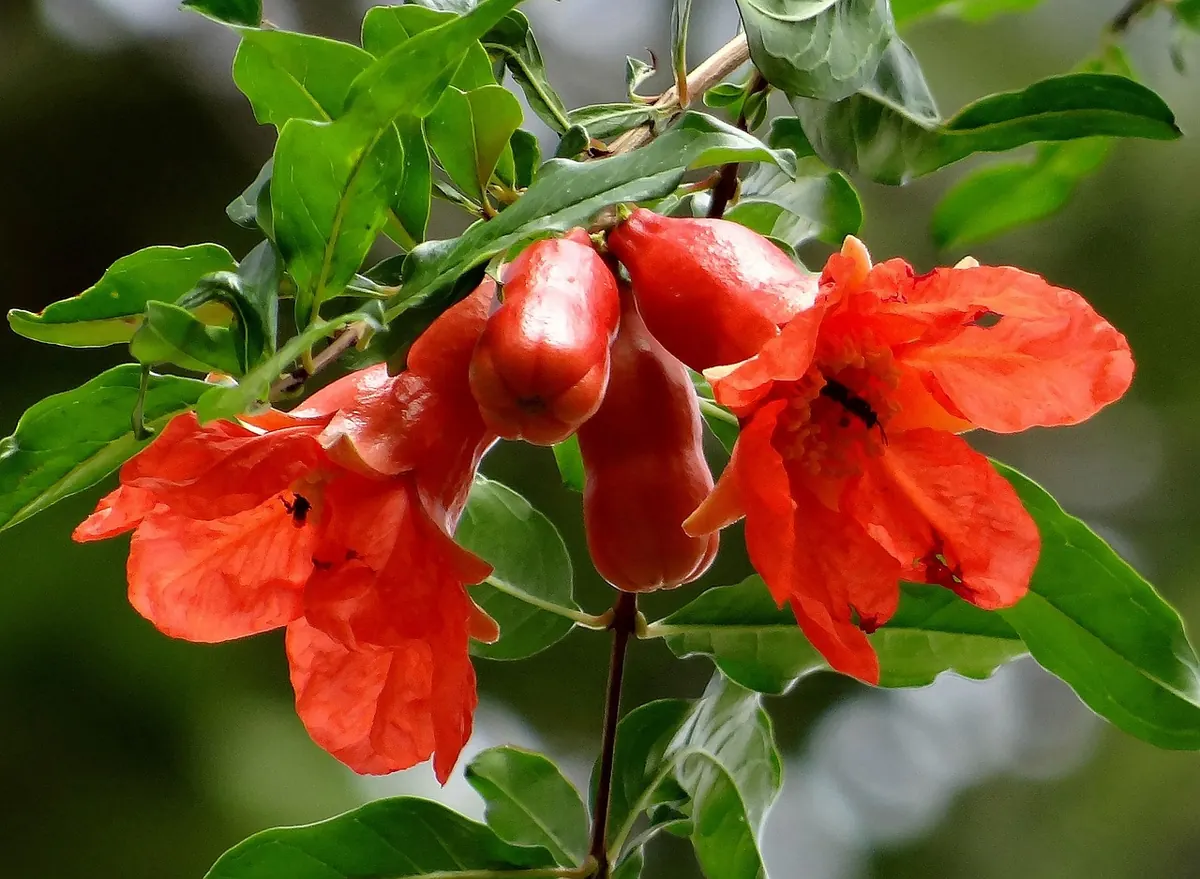
A pomegranate in a pot is one of the most rewarding things you can grow on a sunny patio. The flowers are a deep, lacquered orange-red, the leaves come up bronze in spring, and the fruit hangs like a lantern well into autumn. The problem is that the pomegranate most nurseries sell — 'Wonderful' and its relatives — is a big shrub by nature. Give it five years and a generous container and it will take over the corner of the terrace you had earmarked for a chair.
The answer is not to fight a vigorous plant with secateurs, but to start with something smaller. Dwarf and semi-dwarf pomegranates are easy to find now, and the differences between them matter more than the catalogues let on. Some are grown for fruit, some for flowers, and a few manage both without excelling at either.
What "dwarf" actually means in a pomegranate
Two quite different things get sold under the same word. The first is the true dwarf, Punica granatum var. nana: a genetically compact plant with short spaces between the leaves, narrow glossy foliage and a natural height of around a metre. It has small flowers and small fruit, and it stays proportionate in a pot for years.
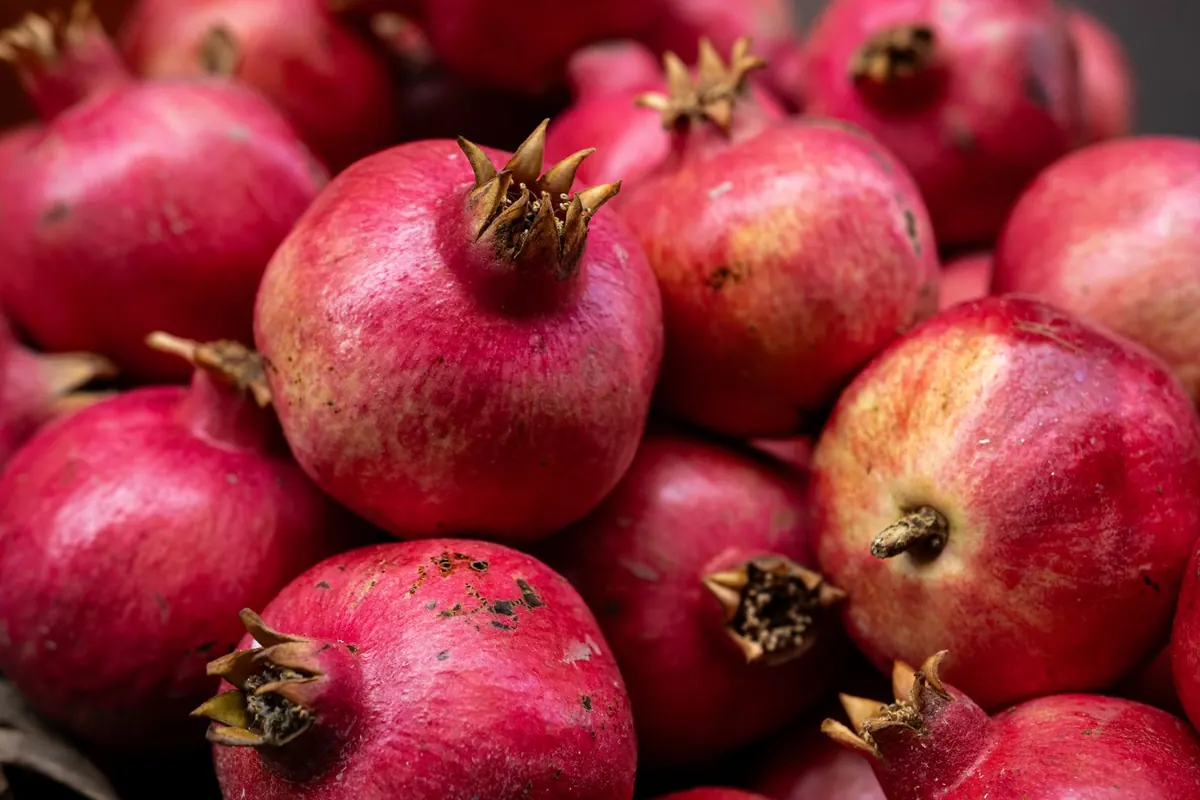
The second is the semi-dwarf: an ordinary pomegranate selected for restrained vigour and generous flowering. The leaves, flowers and fruit are normal size; only the habit is smaller. A semi-dwarf like 'Emperor' can carry a fruit the size of a cricket ball on a plant that fits beside a door.
That distinction decides what you get. Unnamed "dwarf pomegranate" plants, and almost anything grown from seed sold as dwarf, are nana types — pretty, but with fruit smaller than a golf ball. And be wary of any plant that looks compact simply because it is young. A two-year-old 'Wonderful' in a five-litre pot looks perfectly tame. It will not stay that way.
The true dwarfs: 'Nana' and 'Chico'
'Nana' is the classic. Left unpruned in the ground it may reach 1.5 m, but in a 15–20 litre pot it settles at 60–90 cm and looks deliberate rather than cramped. The single orange-red flowers open from late spring until autumn, with the heaviest flush in early summer, and they keep coming on new growth through the season.
The fruit is 3–4 cm across, thin-skinned and seedy, with a sharp, tart juice. It is edible but not a dessert fruit; think syrup, a garnish for drinks, or a welcome gift to the blackbirds. What you are really growing is the flower display and the foliage, which turns butter-yellow before leaf fall.
'Chico' is so close to 'Nana' that the differences barely register in a garden. It is often described as flowering a little more freely and fruiting a little more heavily, and its flowers may be slightly larger. In practice, buy whichever plant is healthier at the nursery and treat them identically.
Why dwarfs suit small pots so well
Both have fine roots and tolerate being pot-bound, which is exactly what you want on a balcony. They also take training beautifully. Choose a single trunk, build three to five main branches, and you have a plant that looks like a miniature tree rather than a bush — the reason they are so popular with bonsai growers. Water them steadily but let the top few centimetres of compost dry out between soakings; constant wetness produces leaf drop and few flowers.
Semi-dwarfs that still give you fruit
If you want to actually eat pomegranates, this is the group to look at.
'Emperor' is the most reliable compact fruiting variety for containers. In a 30–40 litre pot it reaches roughly 2 m, carries large pink-red fruit with reasonably soft seeds, and ripens mid-season. The flavour is sweet-tart and worth the space. It also takes winter cold better than most, which helps in marginal areas.
'Eversweet' is not a dwarf, but it is manageable with annual pruning and it earns its place because the fruit is genuinely sweet and low in acid, with soft seeds. It is vigorous, so plan on 40 litres or more and a proper winter prune to keep it within reach.
'Wonderful' remains the benchmark for flavour. If you have a hot wall, a big container and the patience for a 2.5 m plant, it will reward you. On a small balcony it will not.
Be honest about vigour when you read descriptions. Anything described as strong-growing — many of the soft-seeded Central Asian types fall into this group — will outgrow a 20 litre pot within three years, and a root-bound, overcrowded pomegranate flowers poorly and sets almost nothing.
Flowering dwarfs for ornament alone
The Japanese flowering pomegranates are grown for their double blooms, which look less like fruit blossom and more like crumpled carnations. 'Toyosho' has salmon-pink flowers over a long season; 'Nochi Shibari' produces deep red doubles late in the year; 'Haku-botan' is creamy white and looks astonishing against dark foliage. There are variegated forms too, grown as much for their cream-splashed leaves as their flowers.
Fruit on these is rare or absent, so don't buy one expecting a harvest. What you get instead is weeks of colour and a plant that asks for nothing beyond sun, drainage and a sheltered corner. In cool-summer climates, where pomegranate fruit rarely ripens anyway, this is the sensible choice.
Matching the variety to your pot and your climate
Pomegranates need a long, hot summer to ripen fruit. In a short-season climate you can still grow them beautifully, but you should decide in advance whether the goal is flowers or fruit.
- Small balcony, 15–20 litre pot, cool summers: 'Nana' or 'Chico'. Grow for flowers and autumn colour.
- Sunny patio, 30–40 litre pot, warm summers: 'Emperor' — the best balance of size and real fruit.
- Cool climate, ornamental priority: 'Toyosho' or 'Nochi Shibari'.
- Hot, dry garden with room: 'Eversweet' in 40 litres or more, or 'Wonderful' against a south wall.
- Cold winters, roughly USDA zone 7: 'Nana' and 'Emperor' cope best, but any container plant needs protection.
One more factor: pomegranates are largely self-fertile, but fruit set improves when a second plant is nearby. If you have space for two containers, two different varieties will out-crop a single plant.
Growing any of them well in a container
Variety choice gets you halfway. The rest is pots, compost and winter care.
- Pot size and drainage. Go for 15–25 litres for true dwarfs and 30–45 litres for semi-dwarfs. Terracotta breathes well and looks right, but dries quickly in summer; thick plastic holds moisture better. Either way, raise the pot on feet and never let it stand in water.
- Compost. A loam-based mix with a third grit or perlite suits them. They tolerate slightly alkaline soil, roughly pH 6.5–7.5. Add slow-release feed at potting time and switch to a high-potassium liquid feed every two weeks once flowering starts.
- Watering. Soak thoroughly, then let the surface dry. Irregular watering is the usual cause of split fruit.
- Pruning. Prune in late winter. Remove dead and crossing stems, keep three to five main branches, and shorten last year's growth by about a third. Flowers come on new growth produced from older wood, so hard cutting back costs you a season of bloom.
- Winter. They are deciduous, so leaf drop is normal. Move containers to an unheated greenhouse, a shed or a sheltered wall. A warm room in winter does more harm than frost — they need a cool rest.
- Repotting. Every two to three years in early spring, tease out the outer roots, root-prune lightly if the plant is circling, and replace the top few centimetres of compost in between.
If your plants flower indoors or under cover, transfer pollen with a soft brush in the middle of the day. It takes a minute and makes a visible difference to the crop. Start with one well-chosen plant, learn how it responds to your sun and your watering can, and add a second variety once you know what your conditions will support.
Photo: Oleksandra Zelena / Pexels