Indoor Pomegranate Growing: Light, Pollination and Winter Care

Somewhere around the first cold week of October, the pomegranate stops looking like a Mediterranean plant and starts looking like a problem. The leaves are still glossy, a last fruit or two may still be hanging, and the forecast has begun to mention frost. For growers in cold climates, that is the moment the season changes shape. The tree comes inside, and the work shifts from sunshine and watering to something closer to management: rationing light, pollinating by hand, and deciding whether to keep the plant awake or let it sleep.
None of it is difficult, but the details matter. A pomegranate that spends winter in a dim hallway survives and sulks. One that spends winter in a cool, bright garage comes out with buds already formed. The difference is rarely luck.
Know What the Plant Is Asking For
Pomegranates are deciduous shrubs from semi-arid country. They are not tropical, and they are not houseplants. What they want is a long, hot, bright growing season followed by a genuine rest — cool, quieter, and considerably drier than summer.
Two mistakes account for most winter failures. The first is treating the plant like a ficus: warm room, weak window, water every few days. Growth stretches, leaves pale, spider mites move in, and by February the shrub is a tangle of thin wood. The second is the opposite — banishing it to a dark cellar and forgetting it until April. Roots dry out or rot, and the plant emerges too weak to flower.
Decide in autumn which of the two honest strategies you are following: keep it actively growing under lights at around 15–21 °C, or let it go dormant at roughly 4–10 °C. Both work. Mixing them — warm and dim — does not.
Light Is the Real Constraint
A pomegranate in growth wants full sun, which indoors means a south-facing window at minimum and, honestly, more than that. Six hours of direct sun through glass is a decent target; a bright windowsill in December at higher latitudes delivers a fraction of what a June afternoon does, and the plant knows the difference.
Working with windows alone
If a window is all you have, make it count. Clean the glass inside and out — grime costs more light than most people expect. Move the pot as close to the pane as the radiator allows, and if the sill is deep enough to keep the plant from touching cold glass, so much the better. A sheet of white board behind the plant bounces light back onto the shaded side. Turn the pot a quarter turn every week so the whole shrub, not just the window side, develops.
Accept the limits of this approach. On short winter days a windowsill keeps a pomegranate alive and reasonably content; it rarely keeps it fruiting. That is fine if dormancy is your plan.
Working with supplemental light
To keep the plant growing, hang a full-spectrum LED fixture 20–30 cm above the canopy and run it 12–14 hours a day. Raise the light as the plant grows rather than letting leaves press against it. Watch the new growth: long gaps between leaves, pale colour and flower buds that yellow and drop before opening all mean the plant is running short of light. Short, sturdy internodes and deep green foliage mean you have it about right.
Temperature, Air and the Root Ball
Indoor heating is the hidden enemy. Warm, dry, still air is exactly what spider mites want, and a pomegranate in a heated living room in January is a mite nursery waiting to happen. Keep active plants away from radiators and hot air vents, and give them moving air — a small fan on the lowest setting, aimed to stir the room rather than blast the leaves, does more good than misting.
Remember that the pot is the fragile part. A mature pomegranate in open ground will shrug off short spells well below freezing. The same plant in a container cannot, because the entire root ball sits above ground and freezes solid while the top looks untouched. Bring containers in before the first hard frost rather than after, and if you plan to overwinter in an unheated garage or shed, insulate the pot itself with bubble wrap or a jacket of straw.
Hand Pollination, Step by Step
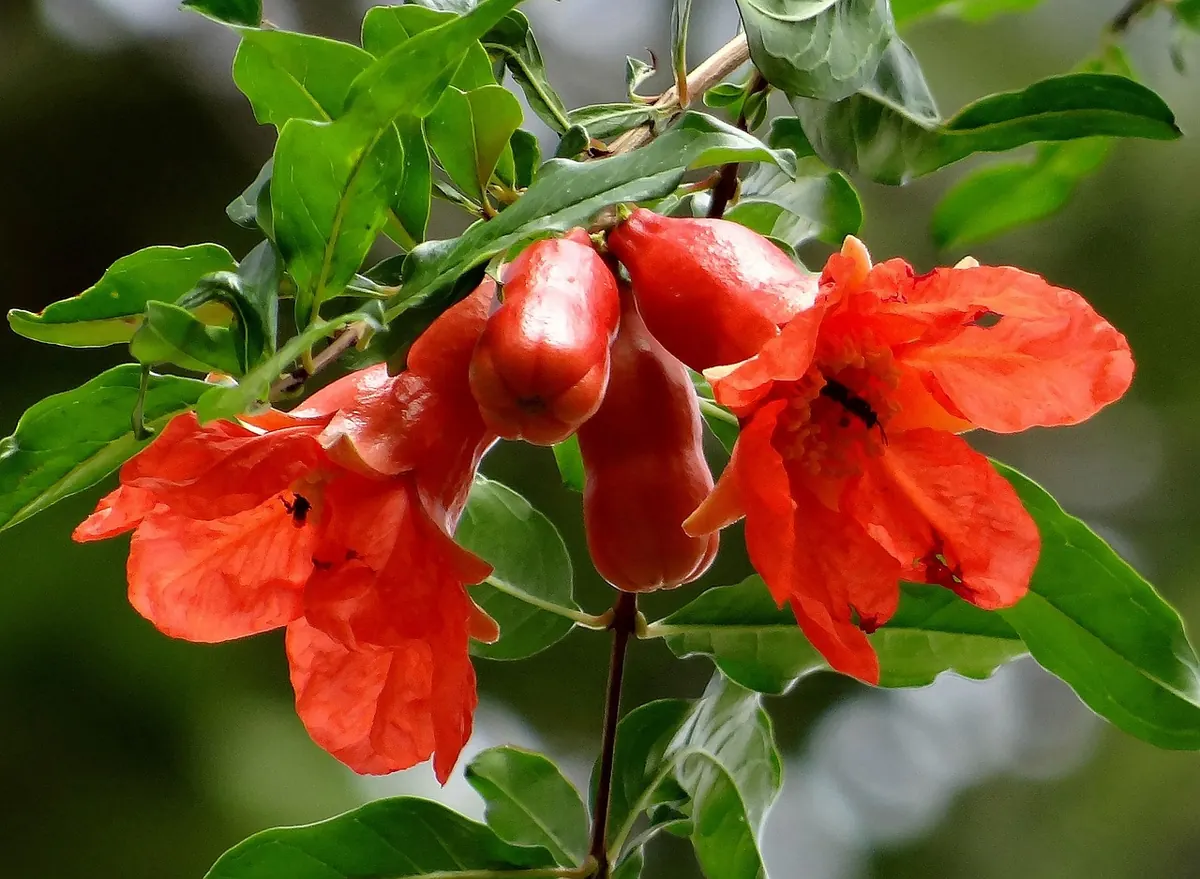
Pomegranates produce two kinds of flowers, and knowing them saves a lot of worry. The vase- or urn-shaped blooms are the hermaphrodite ones and can set fruit. The bell-shaped blooms, wider at the base with a short style, are functionally male; they open, shed pollen and drop. A heavy fall of bell flowers is normal and not a sign of failure.
The species is self-fertile, so a single plant can fruit — but cross-pollination with a second cultivar flowering at the same time usually improves the set. Outdoors, wind and insects do the work. Indoors in winter, there is neither, so you become the pollinator.
- Work in mid-morning, once any condensation has dried. Choose a flower whose anthers look dry and dusted with bright yellow pollen.
- Collect pollen with a soft artist's brush, a cotton swab or the tip of a clean finger, touching it lightly to the anthers.
- Find a vase-shaped flower that opened within the last day or two; the stigma is most receptive early. Transfer the pollen to the sticky tip.
- Repeat on the same flower over two or three days, and across several flowers. One pass is rarely enough.
- Keep air moving gently and tap the branches lightly each day — indoors, a little vibration helps pollen settle where it needs to go.
- Note the date and which flower you pollinated, so you can tell later whether a swelling calyx is a set fruit or simply a flower fading.
Be realistic about the result. Fruit set indoors is modest even when you do everything right, and fruit needs five months or more to ripen. A flower set in January in a northern latitude rarely amounts to much. Treat early indoor blooms as a trial run, and aim for the main flowering after the plant returns outside.
Dormancy Is Not Neglect
A cool rest does a pomegranate good. Given a bright, frost-free spot at 4–10 °C, the plant slows, drops some or all of its leaves, and stops asking for much. Water sparingly — enough to keep the root ball from drying to dust, which in a small pot might mean a light pass every two or three weeks. Feel the weight of the pot before watering rather than following the calendar.
Stop feeding from late summer; fertilizer pushing soft growth into autumn is the last thing a plant heading indoors needs. Do your structural pruning in late winter, just before growth restarts: take out dead and crossing wood, thin the centre so light reaches it, and shorten the long whips that grew over summer.
If you choose the lit, active route instead, keep the plant genuinely warm and genuinely bright. A pomegranate that never rests tends to flower poorly the following season, so expect to trade a little fruit set for a longer growing cycle.
Coming In and Going Back Out
Move containers in before night temperatures settle near 2–4 °C. Before the pot crosses the threshold, check the undersides of the leaves and the rim of the pot for aphids, scale and mite webbing. It is far easier to deal with them outside with a hose and a cloth than in a spare bedroom.
In spring, wait until the last frost has passed before moving the plant out, then harden it over a week to ten days: shade first, an hour or two of morning sun, gradually longer until it is in full sun. A plant shoved straight from a dim winter spot into April sunshine will scorch the leaves it grew indoors.
A Short Winter Routine
- Check light weekly and rotate the pot a quarter turn.
- Water by pot weight, not by habit.
- Inspect leaf undersides for mites, scale and whitefly every time you water.
- Pollinate new vase-shaped flowers in the morning, over several days.
- No fertilizer from late summer until growth restarts in spring.
- Keep a short note of flowering and fruit-set dates — it is the fastest way to learn what your particular windowsill can do.
Ten minutes a week is enough. Do that consistently and the plant comes back out in spring with strong wood, a head start, and a much better chance of a proper flush of flowers.
Photo: jothamsutharson / Pixabay