How to Prune Pomegranate Trees for Better Fruit Set
A pomegranate will fruit without any help at all, and that is exactly the problem. Because it crops even when it is crowded, most gardeners never find out what a well-pruned bush looks like. The tree quietly spends its energy on a thicket of crossing shoots instead of on fruit, and the harvest stays small, late, and tucked away in the shade. The fix is simpler than the plant's slightly exotic reputation suggests. You do not need to count buds or master some delicate technique. You need to know which wood carries the flowers, when to cut so the plant heals quickly, and how to keep light moving through the middle of the canopy. Get those three things roughly right, and the same tree that gave you a dozen leathery fruits will hand you a heavier, cleaner crop.
What Pruning Actually Does for a Pomegranate
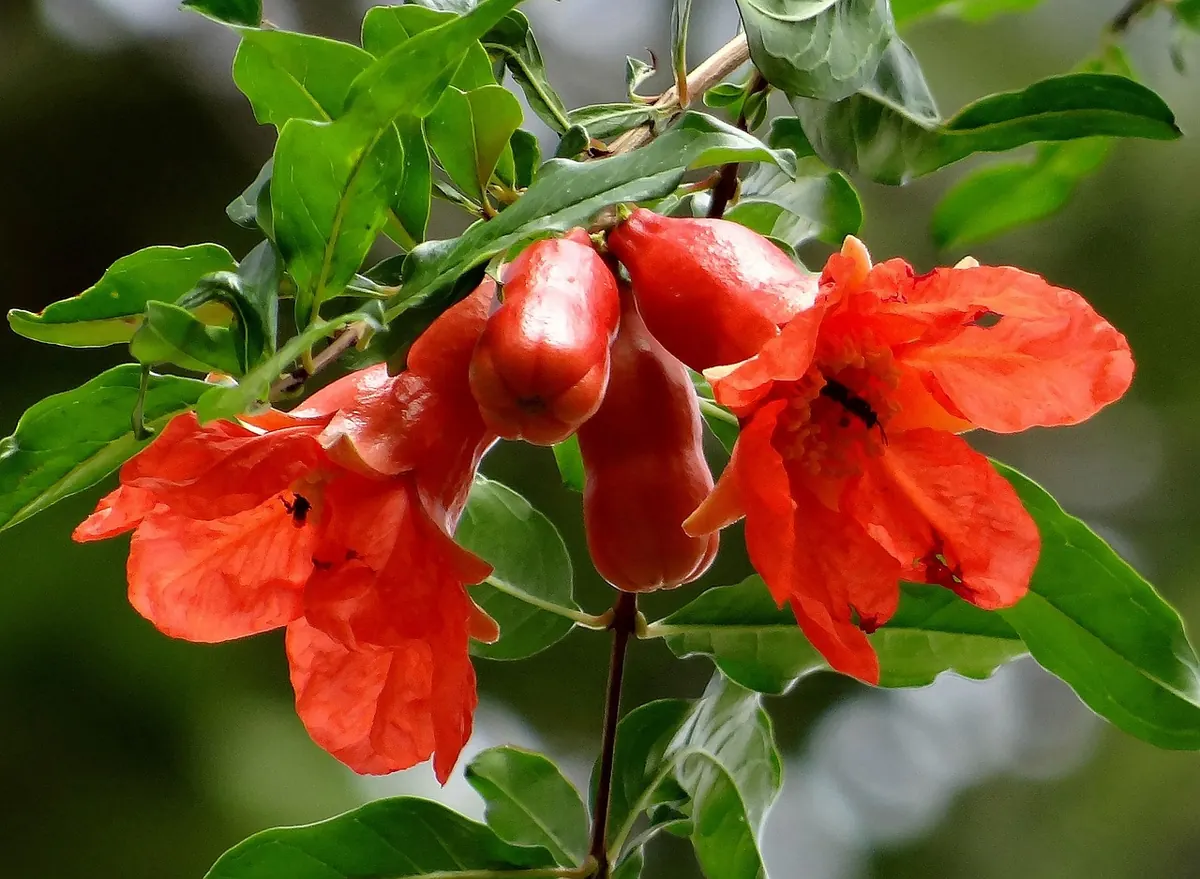
Pomegranates flower on the current season's growth, which pushes out from one- and two-year-old wood. The flowers sit at the tips of those new shoots, usually in clusters of three, and the fruit that sets develops where the flower was. That habit shapes everything about how you should cut. Your aim is not to force the tree into growth; it is to encourage moderate new shoots across the whole canopy rather than a few enormous ones in the places you left alone.
Airflow matters just as much as fruit wood. In humid climates, and in damp springs anywhere, pomegranates lose fruit to rots and pick up leaf spot where the canopy stays still and wet. Opening the middle of the tree does more against those problems than any spray you can buy. Structure is the third piece: pomegranate branches are brittle, and a limb loaded with fruit in a windy autumn can split clean off the trunk. A tree with well-spaced, well-attached limbs avoids that.
Know Your Wood Before You Cut
Stand in front of the plant with the secateurs still in your pocket and look at what you have. You will find four kinds of growth, and each gets its own treatment.
Productive young shoots
These are the slim, slightly angular shoots, often with a reddish or purple tinge on the sunny side, that grow outward and end in a flower or a cluster of leaves. They are your future fruit. Keep as many of them as the tree can carry without crowding.
Water sprouts
Water sprouts are the vigorous, almost vertical shoots that erupt from the upper side of a main limb, often in a whorl. They grow fast, produce little fruit, and shade everything beneath them. Cut them out flush at the base, not halfway along.
Suckers
Suckers rise from the root zone or from low on the trunk. Pomegranates produce them enthusiastically, especially if the roots are disturbed or the plant is pruned hard. They are useful if you are building a multi-stemmed bush and need a new stem; otherwise they are competitors.
Dead and damaged wood
Grey, dry, snapping branches and any limb with a wound or a split. Scrape a little bark with a fingernail: green underneath means alive. Dead wood comes out first, every year.
When to Prune: Two Windows, Not One
The structural work belongs in late winter, once the worst of the frost is behind you and the buds are still tight but starting to swell. In the northern hemisphere that usually means late February into March; in mild Mediterranean climates you can start in January. Pruning in autumn is a poor idea, because the tree may push soft new growth that winter damages.
Summer is for detail work only. In June or July, walk the tree and remove water sprouts, suckers and anything that has broken. Keep it light: no structural cuts while the plant is carrying fruit, and no heavy pruning in a heatwave. Exposed bark on a pomegranate can scorch in strong summer sun, which is one more reason to leave the main framework alone once the season is under way.
Pruning a Pomegranate, Step by Step
Work slowly, and stop to step back every few cuts. The order below matters more than the individual cuts.
- Clear the ground. Ring the trunk with a rake and pull away grass and debris so you can see the base. Then remove dead, broken and diseased wood, cutting back to clean, live tissue.
- Deal with the bottom. Cut all suckers flush unless you are deliberately building a new stem. Rub off the tiny ones with a thumb while they are still soft; they will not return there.
- Choose your framework. Pomegranates can be grown as a single-trunk tree or, more naturally, as a bush with three to five main stems spaced around the base. Pick the strongest, most evenly spaced stems, remove the rest, and cut back any that crowd your chosen ones.
- Open the centre. Remove branches that grow inward, that rub against a neighbour, or that cross the middle of the bush. Imagine a bird flying up through the canopy without touching a twig. That is the target.
- Shorten the long, leggy limbs. Where a branch has run out a metre or more with nothing but leaves, cut it back to a side shoot facing outward. The tree responds by pushing several moderate shoots from that point instead of one runaway.
- Tip lightly where you want branching. On young trees, pinching or tipping the ends of the main shoots in the first two or three years builds a fuller, balanced shape faster than hard cutting later.
- Stop. As a rule, don't take more than about a third of the canopy in one winter. A hard renovation can be done over two or three seasons.
Dealing With Suckers, Water Sprouts and the Aftermath
Suckers and water sprouts are the pomegranate's way of telling you it has energy to spare. Use that energy instead of fighting it.
- Cut flush, not proud. A stub you leave behind dies back, rots and invites problems. Cut close to the trunk or the parent branch, without cutting into it.
- Pull young suckers sideways rather than snipping them, so the dormant buds at the base come away too.
- Check again in midsummer. A second pass in June catches water sprouts before they harden and shade the fruit.
- Keep tools clean between trees and between cuts on damaged wood; a wipe with a household disinfectant is enough.
- Feed and water sensibly. Suckers are worse on over-fed, over-watered plants. Steady moisture and modest feeding do more for fruit set than extra nitrogen.
If your tree sets far too many small fruits, thinning them in early summer — taking out the smallest and any that are damaged, leaving a hand's width between fruitlets — is usually rewarded with larger, better-coloured fruit at harvest.
Mistakes That Cost You Fruit
The most common error is the spring haircut: cutting the whole tree back hard in the belief that it will "make it bush out". It will, but you have removed much of the older wood that would have carried this year's flowering shoots, so the crop drops. The second is leaving the canopy to ball up because the tree looks healthy. Crowded pomegranates still flower, but the fruit sits in shade and stays small. The third is tidying in autumn, which leaves fresh cuts exposed to cold and prompts soft growth at the wrong time.
A Routine You Can Keep Up
Once the framework is set, pomegranate pruning is a twenty-minute job most years. Late winter: remove dead and damaged wood, take out the suckers, cut one or two crowded branches from the middle, shorten anything that got leggy. Early summer: walk round with the secateurs and remove water sprouts and suckers. That is the whole schedule.
Keep your cuts few, your centre open and your framework steady, and the tree does the rest. A pomegranate that sees light on all its sides will flower along the length of its shoots rather than only at the edges, and the fruit will colour properly instead of sulking in the shade. Prune for the structure and the airflow, and the fruit set follows.
Photo: qgadrian / Pixabay